



The Power of Reference: How We Point, Prove, and Preserve Meaning

Understanding Reference: More Than “Citing a Source”
At its core, reference is the relationship between an expression (a word, symbol, label, or pointer) and what it stands for. In everyday conversation, reference helps us identify what we mean: “that book,” “the meeting,” “she,” or “the policy.” In formal settings, reference becomes more explicit and rule-governed: citations in academic writing, case references in law, part numbers in engineering, or identifiers in databases.
Because communication relies on shared understanding, reference is one of the main tools that allows meaning to travel between people, documents, and systems. When reference is precise, it reduces ambiguity and builds trust. When it’s vague or incorrect, it can cause confusion, misinformation, or even costly errors.
Reference in Language: How Words Point to the World
In linguistics and philosophy of language, reference describes how words connect to entities, properties, or concepts. Proper names (“Marie Curie”), definite descriptions (“the tallest building in the city”), and pronouns (“it,” “they”) all function as referring expressions—though they do so in different ways.
Common Types of Linguistic Reference
- Deictic reference: depends on context, such as “this,” “that,” “here,” or “now.” The meaning shifts based on who is speaking and when.
- Anaphoric reference: points back to something already mentioned. Example: “I bought a camera. It was expensive.”
- Cataphoric reference: points forward to something that appears later. Example: “This is what I mean: a clear plan.”
- Generic reference: refers to a whole class, such as “Dogs are loyal.”
Successful reference requires coordination between speaker and listener. In practice, that coordination is built through shared background knowledge, context clues, and conventions—like how a pronoun usually refers to the most recently mentioned compatible noun.
Reference in Writing and Research: Traceability and Credibility
In academic and professional writing, “reference” often means attribution: acknowledging the origin of facts, arguments, data, or phrasing. References make a document verifiable by creating a trail from a claim to its supporting evidence.
Why References Matter
- Credibility: Readers can judge whether claims are grounded in reputable sources.
- Accountability: References discourage plagiarism and intellectual appropriation.
- Reproducibility: Others can locate methods, datasets, or prior work to confirm or extend results.
- Efficiency: Instead of re-explaining everything, writers can build on established knowledge.
Different fields use different citation systems (such as APA, MLA, Chicago, IEEE), but the underlying purpose is consistent: provide enough information for someone else to locate the source and understand how it supports the writing.
Reference in Law and Policy: Precision With Consequences
Legal reference is unusually high-stakes because interpretation can affect rights, liability, and public outcomes. Laws commonly reference other laws, definitions, precedents, and regulations. These cross-references create a network that helps maintain consistency but can also introduce complexity.
Key Features of Legal Reference
- Defined terms: A document may specify that a word has a particular meaning, and later references rely on that definition.
- Precedent and case citation: Courts refer to prior decisions to justify reasoning and maintain continuity.
- Incorporation by reference: A rule may include another document without repeating its full text, saving space but requiring careful version control.
Because a small referencing error (wrong section number, outdated regulation, ambiguous defined term) can change interpretation, legal drafting invests heavily in clarity and consistency. Good reference practices in law reduce dispute risk and increase enforceability.
Reference in Technology: Identifiers, Links, and Memory
In computing, reference commonly means a pointer or handle that lets one part of a system access another. A URL references a resource on the web; a database key references a row; a variable references a value in memory; an API token references an identity and permissions. In each case, the system depends on stable identifiers and well-defined relationships.
Common Technical Forms of Reference
- Hyperlinks: references that enable navigation and verification across documents.
- Unique identifiers: IDs, UUIDs, DOIs, and other stable labels that reduce ambiguity.
- Relational keys: foreign keys that reference records, enforcing integrity in structured data.
- Object references: programming constructs that allow shared access to the same object without copying it.
Technical reference introduces its own challenges: link rot, version drift, broken dependencies, and inconsistent identifiers. Modern best practices—like permanent identifiers (e.g., DOIs), semantic versioning, and robust redirect policies—exist largely to keep references resolvable over time.
Reference as a Social Tool: Trust, Authority, and Shared Reality
Beyond mechanics, reference is also social. When someone says, “According to the report,” or “The manual states,” they are invoking authority. When communities share the same reference points—common texts, standards, measurements, maps, calendars—they can coordinate more effectively. Reference is part of how groups build a shared reality.
However, reference can also be misused. Selective citation, misleading attribution, or referencing unreliable sources can create a false impression of rigor. The quality of reference depends not only on being able to point somewhere, but on pointing responsibly.
Practical Tips for Clear and Reliable Reference
- Be specific: Name the exact source, section, date, or version whenever possible.
- Prefer stable identifiers: Use DOIs, archived URLs, or official document numbers when available.
- Keep context intact: Quote accurately and avoid using references that contradict the claim you attach them to.
- Maintain consistency: Use the same naming conventions throughout a document to avoid “alias confusion.”
- Check resolvability: Ensure links work and citations contain enough detail for retrieval.
Conclusion: Reference as the Infrastructure of Meaning
Reference may look like a small act—adding a footnote, pointing with a pronoun, linking a URL—but it functions like infrastructure. It connects statements to evidence, terms to definitions, systems to records, and people to shared understanding. When references are clear, stable, and honest, they strengthen communication and preserve knowledge. When they are weak or broken, meaning fragments. Learning to use reference well is therefore not only a writing skill or a technical practice; it is a foundational competency for making ideas durable and trustworthy.
Listings related to article "The Power of Reference: How We Point, Prove, and Preserve Meaning"

Springfield Foundation Repair Pros
Springfield Foundation Repair Pros offers foundation repair, inspections, waterproofing, crawl-space, drainage, and sump-pump services in Springfield, Ohio.

Gharibian Law
Gharibian Law is a leading firm specializing in elder abuse and personal injury cases, dedicated to defending the rights of seniors and vulnerable individuals. With a strong record of success in nursing home abuse, medical malpractice, and wrongful death cases, the firm is committed to securing justice and holding negligent parties accountable.

The Shirvanian Law Firm
The Shirvanian Law Firm, located in four California cities (Glendale, Bakersfield, Riverside, and Sacramento), specializes in personal injury cases, particularly motor vehicle accident claims and other negligence-related matters such as wrongful death, premises liability (e.g., slip and fall incidents), and product liability. Our dedicated team of injury attorneys is committed to securing maximum compensation and facilitating your recovery by ensuring you receive the necessary medical care.
More articles like "The Power of Reference: How We Point, Prove, and Preserve Meaning"

Reference Guide to World Records: How Extraordinary Feats Are Measured and Remembered
World records capture the outer limits of human achievement, natural extremes, and cultural curiosity. This guide explains what world records are, how they are verified, and why they remain a powerful form of global reference.
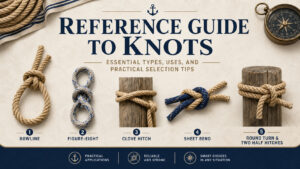
Reference Guide to Knots: Essential Types, Uses, and Practical Selection Tips
Knots are fundamental tools for securing, lifting, joining, and adjusting rope in countless settings. This reference guide explains major knot categories, common examples, and how to choose the right knot for the job.

Reference Thesauri: How Structured Vocabularies Improve Discovery and Meaning
Reference thesauri are controlled vocabularies that organize related terms to improve indexing, searching, and knowledge discovery. They help users move beyond simple synonyms by showing broader, narrower, and associated concepts in a structured way.
