



Science: The Ever-Improving Toolkit for Understanding Reality
What Science Is (and What It Isn’t)
Science is a systematic approach to understanding the natural world by developing explanations that can be tested against observations. At its best, it blends curiosity with discipline: questions become hypotheses, hypotheses become experiments or structured observations, and results become evidence that updates what we think we know. Rather than being a static set of facts, science is a living process—one that rewards clarity, skepticism, and openness to revision.
It is equally important to recognize what science is not. Science does not claim infallibility, and it does not provide certainty in the way a mathematical proof does. Instead, it offers degrees of confidence based on the quality and quantity of evidence. Scientific conclusions are always provisional, because new data, better tools, or improved theories can refine or overturn earlier ideas.
How Scientific Knowledge Is Built
Although the “scientific method” is often taught as a fixed sequence of steps, real scientific work is more flexible. Different fields use different approaches—controlled experiments, field surveys, simulations, archival analysis, or theoretical derivations—but they share key commitments: transparency, testability, and accountability to evidence.
Core Elements of Scientific Practice
- Observation and measurement: Science begins by noticing patterns or anomalies and quantifying them when possible.
- Hypotheses and models: Scientists propose explanations that make specific predictions. Models may be conceptual (a diagram) or quantitative (an equation).
- Testing and replication: Claims gain strength when independent teams can reproduce results under similar conditions.
- Peer review and critique: Studies are evaluated by other experts who assess methods, logic, and evidence.
- Revision and synthesis: Over time, individual findings are integrated into broader frameworks such as theories, which unify many observations.
In practice, science is also shaped by tools. Telescopes expanded astronomy, microscopes transformed biology, particle accelerators probed matter, and modern computing enables simulation and analysis on scales previously impossible. Better tools often reveal new questions, making science a self-reinforcing engine of discovery.
Why Science Works: Reliability Without Certainty
Science is effective because it builds in mechanisms that detect and correct error. Bias, flawed measurement, and overconfident interpretation are persistent human risks, so scientific norms aim to counterbalance them. For example, statistical reasoning helps quantify uncertainty; blinding reduces expectation effects; preregistration (in some fields) limits “after-the-fact” storytelling; and open data allows others to check analyses.
Crucially, science values predictive power. When a theory reliably predicts outcomes across diverse contexts, confidence increases. This is why scientific knowledge can be dependable even though it is not absolute. Airplanes fly, vaccines reduce disease, and GPS works because scientific models are accurate enough for practical purposes—and continuously improved when discrepancies appear.
Branches of Science and How They Interconnect
Science is often divided into disciplines, but nature does not respect departmental boundaries. Many of today’s most productive advances happen at intersections: biochemistry, geophysics, cognitive neuroscience, and climate science are all hybrid fields.
Major Domains
- Physical sciences: Physics and chemistry explore matter, energy, forces, and transformations—from subatomic particles to materials and reactions.
- Life sciences: Biology investigates living systems, from genes and cells to ecosystems and evolution.
- Earth and space sciences: Geology, meteorology, oceanography, and astronomy study our planet and the wider universe.
- Social and behavioral sciences: Psychology, sociology, economics, and related fields examine behavior, institutions, and decision-making using empirical methods.
- Computer and data sciences: These provide tools for modeling, inference, and large-scale analysis, and increasingly function as a methodological backbone across disciplines.
Interconnection matters because complex problems—pandemic preparedness, energy transitions, biodiversity loss, misinformation—are not purely technical or purely social. Effective solutions require both scientific understanding and knowledge about human systems.
Science in Everyday Life
Science is often invisible precisely because it works. Modern life is filled with technologies and policies grounded in scientific evidence: clean water systems built on microbiology, building codes informed by materials science, and medical diagnostics powered by biochemistry and imaging. Even routine choices—evaluating a health claim, interpreting a weather forecast, or understanding a nutrition label—are easier with scientific literacy.
Everyday Benefits of Scientific Thinking
- Better decisions under uncertainty: Understanding probability and risk helps people weigh trade-offs realistically.
- Resistance to misinformation: Familiarity with evidence and sources makes it easier to spot exaggerated or unfalsifiable claims.
- Curiosity and creativity: Scientific habits—asking “what if?” and “how would we test that?”—support innovation in any field.
Limitations, Ethics, and the Human Side of Science
Science is powerful, but it is not value-neutral in its applications. Data can be misused, experiments can be unethical, and technologies can have unintended consequences. That is why ethical oversight, informed consent, responsible data governance, and public accountability matter—especially in areas such as genetics, artificial intelligence, and environmental interventions.
Science is also a human enterprise. Incentives, funding priorities, publication pressures, and cultural assumptions can shape what gets studied and how results are communicated. Recognizing these influences does not weaken science; it strengthens it by motivating reforms such as open science practices, better statistical standards, and more inclusive participation.
The Frontier: Questions That Keep Science Moving
Science advances by turning mysteries into problems that can be investigated. Some frontiers involve the very large—dark matter, dark energy, and the origin of cosmic structure. Others are intimately close—how consciousness arises, how to repair tissues, how ecosystems respond to change, or how to design materials that are both high-performance and sustainable. Each frontier pushes methods forward, improving measurement, theory, and collaboration.
Ultimately, science is less a collection of facts than a commitment: to let the world, as measured and observed, arbitrate what we believe. That commitment has reshaped civilization, and it continues to offer one of the most reliable paths we have for understanding reality—and for building a future guided by evidence rather than assumption.
Listings related to article "Science: The Ever-Improving Toolkit for Understanding Reality"
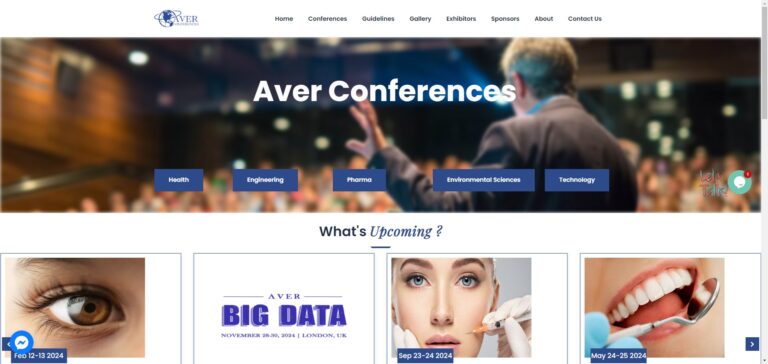
Aver Conferences
Aver Conferences specializes in the coordination of scientific and international conferences across a diverse range of fields, including Science and Technology, Health and Medicine, Engineering, and Pharma subjects.
- Category
- Science » Events » Conferences
More articles like "Science: The Ever-Improving Toolkit for Understanding Reality"

Reference Guide to World Records: How Extraordinary Feats Are Measured and Remembered
World records capture the outer limits of human achievement, natural extremes, and cultural curiosity. This guide explains what world records are, how they are verified, and why they remain a powerful form of global reference.

Science: The Art of Asking Better Questions
Science is a systematic way to build reliable knowledge by testing ideas against evidence. It thrives on curiosity, measurement, and a willingness to revise what we think we know.

The Power of Reference: How Trustworthy Pointers Shape Knowledge, Design, and Decisions
A reference is more than a citation—it’s a reliable pointer that connects people, systems, and ideas to verifiable sources. This article explains references across writing, research, software, and everyday decision-making, with practical guidance for using them well.
