



The Power of Reference: How Context, Sources, and Links Shape What We Know

What “Reference” Really Means
A reference is anything that points beyond itself to provide identification, context, support, or direction. In everyday life, references help us verify claims, find information again, or connect one idea to another. In professional settings, references become the backbone of credibility: they show where an idea came from, how a decision was justified, or which standard a process follows.
Although the word appears in many fields, the core function remains consistent: a reference creates a reliable bridge between a statement and something that can be checked, revisited, or used to interpret meaning.
Core Purposes of Reference
1. Attribution and Intellectual Honesty
When you cite a study, quote a source, or credit a creator, you are using reference to acknowledge origin. This matters ethically and legally, but it also improves communication: readers can trace an idea to its source and understand its original context.
2. Verification and Trust
References allow others to verify what you claim. A report that includes clear references—data sources, methods, standards—invites scrutiny and therefore earns confidence. In contrast, unsupported assertions force the audience to rely on authority or guesswork.
3. Navigation and Retrieval
References also function like signposts. Indexes, hyperlinks, cross-references, footnotes, and catalog numbers exist to help people locate information quickly. This is as true in a library as it is in a software codebase.
4. Shared Context and Precision
In technical writing, law, medicine, and engineering, referencing established definitions and standards reduces ambiguity. If a contract references a specific regulation or a technical document references an ISO standard, participants share a stable, precise frame of meaning.
Reference Across Major Domains
Academic and Professional Writing
In research, a reference list is more than a formality—it’s a map of the intellectual environment surrounding a work. The choice of sources signals rigor, currency, and disciplinary alignment. Good referencing makes writing stronger by anchoring claims in existing knowledge and clarifying which contributions are new.
- In-text citations connect claims to sources at the point of use.
- Bibliographies provide complete details for locating materials.
- Footnotes/endnotes add nuance without interrupting the narrative.
Employment and Character References
A job reference is a person who can speak to your work quality, reliability, and collaboration. It operates differently from academic citation: rather than pointing to published evidence, it points to lived experience and professional judgment. Strong references are specific—describing outcomes, behaviors, and contexts—rather than vague praise.
- Professional references from supervisors or colleagues focus on performance.
- Character references emphasize integrity, responsibility, and interpersonal traits.
- Background verification may confirm employment dates, titles, and responsibilities.
Software Development: References as Pointers and Links
In programming, a reference often describes a way to access an object or value indirectly. Many languages differentiate between passing a value (copying data) and passing a reference (sharing access to the same underlying object). This has major implications for performance, memory, and side effects.
Beyond memory semantics, software teams rely on references in the broader sense: API documentation, issue trackers, commit hashes, and dependency versions are all reference systems that keep complex work coordinated and reproducible.
- Object references can make systems efficient but require careful mutation control.
- Documentation references (API docs, runbooks) reduce tribal knowledge.
- Version references (tags, commit IDs) enable reproducible builds and audits.
Law, Policy, and Standards
Legal and regulatory environments rely heavily on reference. Statutes cite other statutes; contracts incorporate external documents “by reference”; court decisions reference precedent. This creates continuity, but also complexity: if referenced material changes, the meaning of the referencing document may shift unless it specifies a fixed version or date.
Standards referencing is similarly powerful: a manufacturing process that references a standard inherits best practices, testing requirements, and definitions without repeating them.
What Makes a Reference “Good”?
Clarity
A good reference is unambiguous. Readers should know exactly what is being referenced and how to find it. In writing, that means complete citation details; in software, that means stable identifiers; in business, that means naming the right person with correct contact details.
Relevance
References should directly support the claim or purpose. Over-referencing can create noise—long lists that look impressive but fail to strengthen the argument. The best references are selective and purposeful.
Reliability
Not all sources are equal. Reliability comes from methods, transparency, expertise, and track record. For online sources, reliability also depends on permanence—links rot, pages change, and content can disappear. When permanence matters, archived copies and persistent identifiers improve stability.
Traceability
Traceability means someone else can follow the reference path and reach the same material you used. That requires consistent formatting, correct titles, stable URLs or identifiers, and (when applicable) version or edition information.
Common Pitfalls and How to Avoid Them
- Broken or shifting links: Prefer persistent identifiers when possible and record access dates for web sources.
- Vague citations: Cite the specific page, section, dataset, or timestamp that supports the claim.
- Reference overload: Choose fewer, stronger references rather than many weak ones.
- Uncritical sourcing: Evaluate bias, methodology, and incentives behind sources.
- Version ambiguity: In technical and legal contexts, specify the exact version, edition, or effective date of what you reference.
Why Reference Skills Matter More Than Ever
In a world flooded with information, reference is a practical skill and a cultural value. It teaches us to ask: “How do you know?” and “Where did that come from?” Whether you are writing a report, building software, making a policy decision, or applying for a job, strong referencing transforms private knowledge into shareable knowledge—knowledge others can verify, reuse, and build upon.
Ultimately, reference is not just about formality. It is about making ideas durable, accountable, and connected. The better our references, the more robust our conversations—and the more trustworthy our work—become.
Listings related to article "The Power of Reference: How Context, Sources, and Links Shape What We Know"
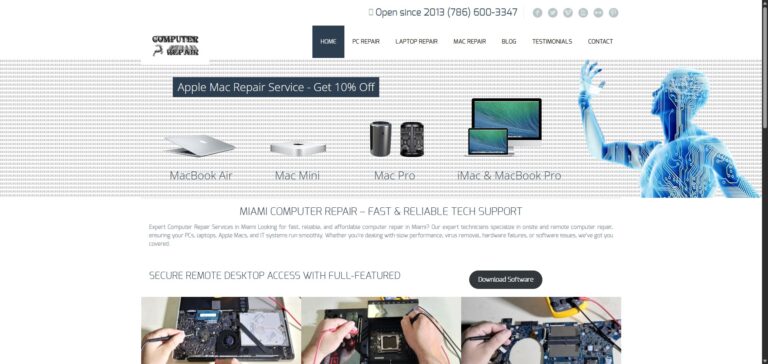
Top-Rated Computer and Mac Repair Services in Miami
Looking for reliable computer and Mac repair services in Miami? Our experienced technicians offer quick, professional solutions for all kinds of devices—including laptops, desktops, iMacs, MacBooks, and more. Whether you’re facing hardware failures, software glitches, system crashes, or need an upgrade, we’re here to help.
- Category
- Computers » Hardware » Support and Services

Lighting and Supplies
Lighting and Supplies (Lightingandsupplies.com) is your premier destination for safe, efficient LED lighting solutions, catering to commercial and industrial needs. With over 45 years of industry experience and a vast inventory of 100,000’s bulbs, fixtures, and electrical supplies, we offer turnkey solutions for projects of any scale.

The Shirvanian Law Firm
The Shirvanian Law Firm, located in four California cities (Glendale, Bakersfield, Riverside, and Sacramento), specializes in personal injury cases, particularly motor vehicle accident claims and other negligence-related matters such as wrongful death, premises liability (e.g., slip and fall incidents), and product liability. Our dedicated team of injury attorneys is committed to securing maximum compensation and facilitating your recovery by ensuring you receive the necessary medical care.
More articles like "The Power of Reference: How Context, Sources, and Links Shape What We Know"

Reference Guide to World Records: How Extraordinary Feats Are Measured and Remembered
World records capture the outer limits of human achievement, natural extremes, and cultural curiosity. This guide explains what world records are, how they are verified, and why they remain a powerful form of global reference.

Reference Thesauri: How Structured Vocabularies Improve Discovery and Meaning
Reference thesauri are controlled vocabularies that organize related terms to improve indexing, searching, and knowledge discovery. They help users move beyond simple synonyms by showing broader, narrower, and associated concepts in a structured way.

The Power of Reference: How Reliable Anchors Shape Knowledge and Trust
A reference is more than a citation—it is a structured link to prior knowledge that enables verification, context, and credibility. This article explains what references are, why they matter, and how to use them effectively across academic, professional, and digital settings.