



More Than Four Walls: The Many Lives of Home
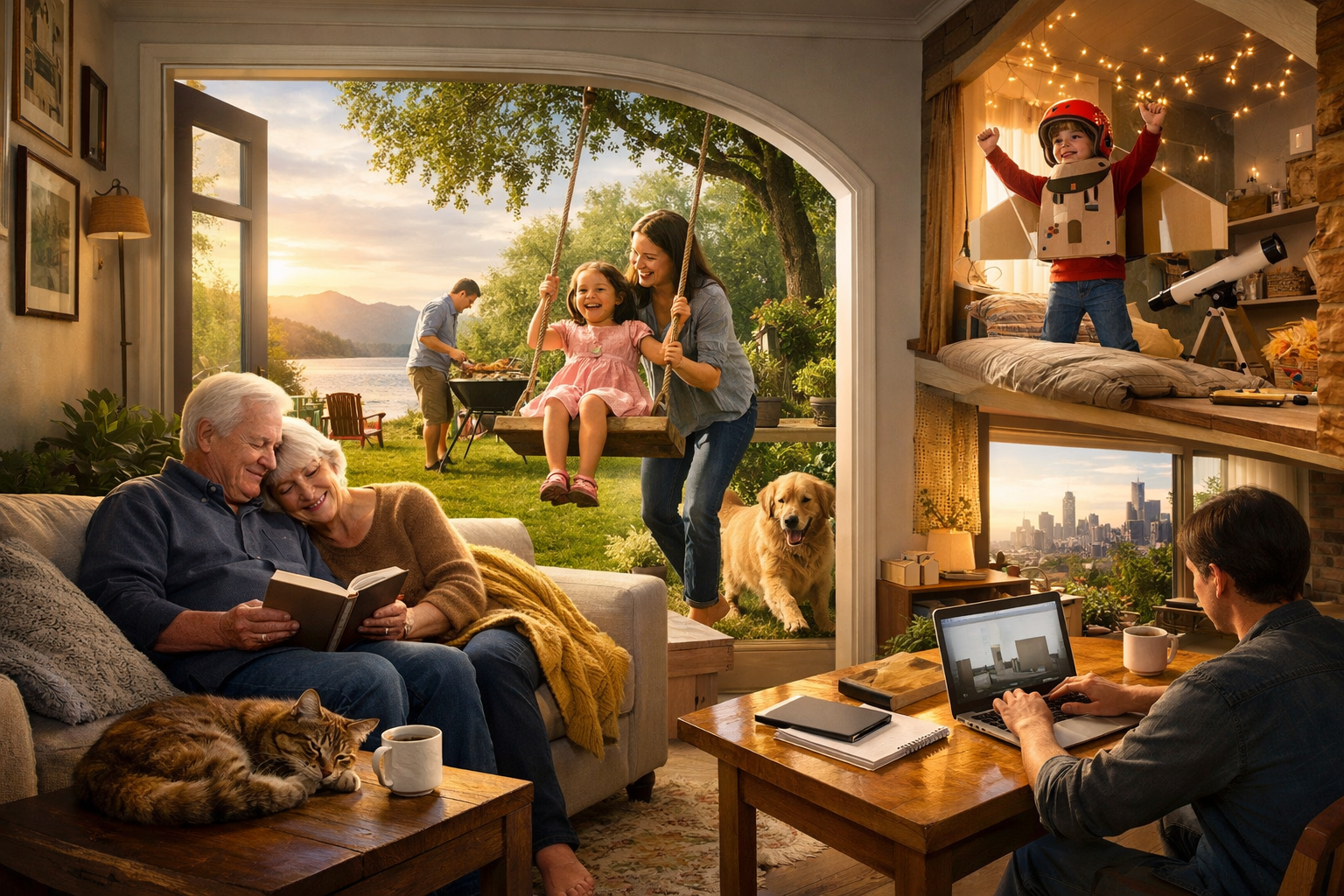
What “Home” Really Means
The word home is deceptively simple. For some, it is a specific address—the house on a familiar street, the apartment with creaky floors, the room that still smells like a favorite meal. For others, home is a person, a language, a city skyline, or even a routine repeated in different places. While a house is a physical structure, a home is the lived experience inside it: comfort and conflict, belonging and boundaries, the constant negotiation between privacy and connection.
Home has always carried practical meaning—shelter from weather, a base for work and rest—but it also holds deep emotional and cultural weight. It can be a sanctuary, a workshop, a gathering space, or a starting point. And sometimes, it can be something you must redefine after change: a move, a loss, a new family configuration, or a fresh start.
Home as Shelter: Safety, Stability, and Basic Needs
At its foundation, home serves the human need for safety. A secure place to sleep, store belongings, and recover from the day is not a luxury; it’s the groundwork for health and stability. The practical elements that support this sense of shelter are often invisible until they fail—heat in winter, cooling in summer, clean water, reliable locks, and protection from noise or intrusion.
Stability also matters. When housing is uncertain or constantly shifting, daily life becomes harder to manage. Planning, relationships, and even concentration can suffer. In this way, home is not only a location but a platform that supports long-term goals: education, careers, and community ties.
Home as Identity: Memory, Culture, and Personal Story
Home often acts like a mirror, reflecting who we are and where we come from. It holds objects that are more than objects: photographs that preserve timelines, worn furniture that carries family history, or a bookshelf that quietly tells you what someone loves. Even small details—how spices are arranged, whether shoes are left by the door, what music plays in the background—signal culture and habit.
For people living far from their birthplace, home can become a portable concept. A certain dish cooked on weekends, a holiday ritual, or a familiar greeting can recreate home across distance. This is why the phrase “feels like home” is so powerful: it points to recognition, the sense that something fits your inner story.
The Emotional Architecture of Belonging
Beyond décor and layout, home has an emotional “floor plan.” A home that feels good usually includes:
- Belonging: the sense that you are accepted as you are.
- Control: the ability to set boundaries, decide routines, and shape your environment.
- Continuity: familiar patterns that reduce stress and create comfort.
- Restoration: a place where your nervous system can calm down.
These qualities can exist in many living situations, from a bustling multi-generational household to a small studio. They are less about size and more about whether the space supports the people inside it.
Home as Relationship: Shared Spaces and Private Corners
Home is rarely experienced in isolation, even when one lives alone. Neighbors, roommates, family members, partners, and guests all influence how “home” feels. A shared home can be a site of warmth and teamwork, but it can also bring friction—differences in cleanliness standards, noise tolerance, or expectations around privacy.
Healthy homes tend to balance togetherness and separation. Communal areas invite connection, while private corners offer retreat. This balance is especially important as modern life blurs boundaries: remote work, online schooling, and constant connectivity can make it feel like the outside world never leaves. Creating clear zones—whether physical or time-based—helps restore the home’s role as a place of rest.
How We Build “Home” in New Places
Moving often reveals what home truly is. In a new city or a new country, the absence of familiar cues can feel disorienting. Yet home can be built intentionally. The process is part practical, part emotional: setting up essentials, learning local rhythms, and gradually attaching memories to the new environment.
Simple actions can accelerate the feeling of belonging:
- Establish routines (morning coffee, evening walk, weekly meal) to create predictability.
- Personalize one small area first—your bed, desk, or kitchen corner.
- Connect locally through a library, market, community group, or hobby class.
- Bring sensory anchors such as familiar scents, textiles, music, or recipes.
Over time, the new place stops feeling borrowed and starts feeling inhabited. Home becomes less about what you left behind and more about what you have cultivated.
Home in the Modern World: Flexibility and Meaning
Today, home is evolving. Smaller households, remote work, and rising housing costs have changed how people live and what they expect from their spaces. A home might need to function as an office, classroom, gym, and sanctuary all at once. This has led many to rethink what matters: light, quiet, storage, and adaptability often outrank impressiveness.
At the same time, there is a renewed appreciation for home as a place of grounding. In a fast-moving world, the most valuable home features may be the least flashy: a comfortable chair, a well-used kitchen, a door that closes, a window that opens, and people—or pets—who make you feel seen.
When Home Is Complicated
Not everyone associates home with comfort. For some, home can be tied to conflict, instability, or painful memories. In those cases, redefining home can be an act of healing—creating a safer environment, seeking supportive relationships, or establishing boundaries that were previously missing. Home does not have to be a fixed inheritance; it can be a deliberate creation.
The Essentials of a Home That Feels Good
While every home is unique, certain elements tend to support well-being across cultures and lifestyles:
- Safety: physical security and emotional respect.
- Function: spaces that match daily needs, even if simple.
- Comfort: lighting, temperature, and textures that soothe.
- Expression: room for personality, memory, and meaning.
- Connection: access to community, nature, or relationships.
Ultimately, home is where your life becomes ordinary in the best way—where you can exhale, make a cup of tea, put things back where you like them, and feel that you belong to your own days. It is not merely a destination. It is a practice: built, maintained, and renewed through attention, care, and the stories you choose to live inside it.
Listings related to article "More Than Four Walls: The Many Lives of Home"

Pawtucket Home Windows
Window installation, window replacement, door replacement, and energy-efficient home window services in Pawtucket, Rhode Island.
- Category
- Home » Home Improvement » Windows and Doors

Daley Gas Group
Professional gas, boiler, heating, landlord safety check, and gas leak detection services for customers in Chester and nearby areas.
- Category
- Home » Home Improvement » Climate Control

Laureate Aesthetics
Laureate Aesthetics is a boutique medical spa located in Sherman Oaks, California, founded by Nurse Practitioner Liana Sahakyan, RN, MSN, and dedicated to providing personalized, high-end aesthetic treatments that enhance natural beauty.
More articles like "More Than Four Walls: The Many Lives of Home"

Beyond the Whistle: Why Informal Sports Matter More Than Ever
Informal sports turn parks, streets, beaches, and backyards into spaces for movement, connection, and creativity. They offer flexible, low-cost ways to stay active while building community and confidence.

Recreation Reimagined: How Play, Nature, and Leisure Build Better Lives
Recreation is more than entertainment—it’s a vital practice that supports physical health, mental resilience, and social connection. From outdoor adventures to creative hobbies, intentional leisure can strengthen communities and improve everyday well-being.

Growing Up Connected: Practical Guidance for Kids and Teens Today
Kids and teens face rapid changes in friendships, school, identity, and technology. This guide breaks down what supports healthy development and how adults can help without taking over.