



Science: The Art of Asking Better Questions
What Science Is—and What It Isn’t
Science is a method for learning about the world by making careful observations, proposing explanations, and testing those explanations against evidence. It is less a body of facts than a disciplined process for reducing error. Scientific knowledge is powerful because it is checkable: results can be scrutinized, reproduced, and challenged by others.
Just as importantly, science is not a guarantee of certainty. It rarely delivers final answers; instead it offers the best available explanations given current evidence. When new data arrive or better tools emerge, scientific conclusions may shift—not because science is “unreliable,” but because it is designed to update.
How Scientific Knowledge Is Built
Although different fields use different techniques, most scientific work follows a recognizable logic. Scientists begin with questions, then move toward claims that can be tested and potentially refuted. This emphasis on testability separates science from purely philosophical or ideological assertions.
Observation, Hypotheses, and Models
Science often starts with an observation: a pattern in nature, an unexpected measurement, or a practical problem. From there, a scientist might propose a hypothesis, a tentative explanation that leads to predictions. Many hypotheses are expressed through models—simplified representations of complex systems. A model might be a set of equations describing planetary motion, a diagram of a cell signaling pathway, or a computer simulation of climate dynamics.
Good models are not perfect replicas of reality; they are useful tools. Their value lies in their ability to predict outcomes and guide new experiments, while making assumptions transparent.
Experimentation and Measurement
To test a hypothesis, scientists design experiments or observational studies that collect data under defined conditions. In laboratory sciences, experiments may isolate variables to infer cause-and-effect. In fields like astronomy or geology, where controlled experiments are often impossible, scientists rely on natural experiments, comparative evidence, and converging lines of data.
Measurement is central. Instruments extend our senses, from microscopes revealing microbes to detectors capturing gravitational waves. With measurement comes uncertainty, so scientists quantify error, calibrate tools, and use statistics to distinguish signal from noise.
Peer Review, Replication, and Self-Correction
Scientific claims gain credibility through community scrutiny. Peer review aims to assess whether methods are sound and conclusions follow from evidence. Replication—independent researchers reaching similar results—adds confidence. Importantly, science contains mechanisms for self-correction: failed replications, improved analyses, and new data can overturn earlier conclusions. While this can look like disagreement, it is often the system working as intended.
The Branches of Science and How They Connect
Science is commonly divided into broad domains, each with its own methods and questions, yet deeply interconnected. Breakthroughs often happen at the boundaries.
- Physical sciences (physics, chemistry) explore matter, energy, forces, and interactions—foundations for technologies like semiconductors and batteries.
- Life sciences (biology, medicine) investigate living systems, from ecosystems to molecular genetics, enabling advances such as vaccines and targeted therapies.
- Earth and space sciences (geology, meteorology, astronomy) study planets, climate, and the universe, informing disaster preparedness and revealing cosmic history.
- Social and behavioral sciences (psychology, economics, sociology) examine human behavior and societies using data-driven approaches, improving policy and understanding of decision-making.
These categories overlap. For example, climate science blends physics (radiation), chemistry (atmospheric reactions), biology (carbon cycles), and social science (human systems and incentives).
Science in Everyday Life
Even when it feels abstract, science shapes daily experience. Modern sanitation depends on microbiology and chemistry. GPS relies on precise timekeeping and relativity. Medical imaging uses physics to see inside the body without surgery. Agricultural science supports food production with improved crops, soil management, and pest control strategies.
Beyond inventions, science also influences how we make decisions. Reading a nutrition study, evaluating a health claim, or interpreting polling data all benefit from scientific literacy: understanding sample sizes, confounding variables, and the difference between correlation and causation.
Why Scientific Uncertainty Is a Feature, Not a Flaw
Uncertainty is sometimes portrayed as weakness, but in science it is a form of honesty. Reporting confidence intervals, margins of error, or competing hypotheses communicates what is known and what remains unclear. This transparency allows others to improve on the work.
Scientific conclusions become robust when many independent methods converge. For instance, the link between smoking and lung cancer rests on epidemiology, laboratory biology, and clinical data—multiple approaches pointing to the same causal story. Similarly, our understanding of Earth’s warming climate draws from thermometer records, satellite measurements, ice cores, and physical models.
Ethics, Responsibility, and the Human Side of Science
Science is conducted by people, and people have biases, incentives, and limitations. Ethical standards exist to protect participants, ensure humane treatment of animals, manage conflicts of interest, and promote integrity. Responsible science also considers downstream impacts: who benefits, who bears risks, and how knowledge may be misused.
Open science practices—sharing data, code, and methods—help reduce errors and improve trust. Diversity in scientific communities strengthens problem-solving by bringing multiple perspectives to complex questions.
How to Think More Scientifically
You don’t need a lab coat to adopt scientific habits. The mindset is portable and practical.
- Ask precise questions: Replace “Does it work?” with “For whom, under what conditions, and compared to what?”
- Look for mechanisms: A good explanation often includes how a cause produces an effect.
- Check the evidence quality: Prefer controlled studies, transparent methods, and replicated findings over anecdotes.
- Consider alternative explanations: Confounders and selection effects can mimic real patterns.
- Update your beliefs: Treat conclusions as provisional and adjust when better evidence appears.
The Ongoing Story of Discovery
Science is one of humanity’s most successful cooperative projects: a long conversation between ideas and evidence. Its strength lies not in claiming perfect knowledge, but in building increasingly reliable understanding over time. By turning curiosity into testable questions, and by welcoming correction, science expands what we can explain, predict, and create—while reminding us that the next discovery may begin with admitting what we do not yet know.
Listings related to article "Science: The Art of Asking Better Questions"
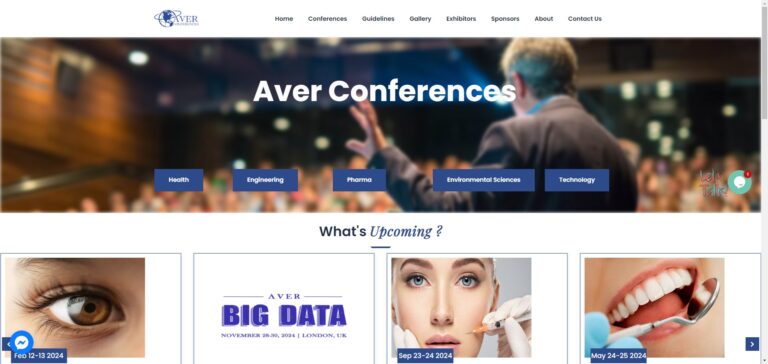
Aver Conferences
Aver Conferences specializes in the coordination of scientific and international conferences across a diverse range of fields, including Science and Technology, Health and Medicine, Engineering, and Pharma subjects.
- Category
- Science » Events » Conferences

Art Kitchen Direct for Chicago Builders and Developers
Introducing Kinzini, the go-to destination for comprehensive kitchen services tailored exclusively for builders and developers in Chicago. With a meticulous approach from start to finish, they specialize in crafting exceptional kitchens, vanities, and closets that surpass industry standards.
- Category
- Home » Home Improvement » Kitchens
More articles like "Science: The Art of Asking Better Questions"
Reference Guide to World Records: How Extraordinary Feats Are Measured and Remembered
World records capture the outer limits of human achievement, natural extremes, and cultural curiosity. This guide explains what world records are, how they are verified, and why they remain a powerful form of global reference.
Science: The Ever-Improving Toolkit for Understanding Reality
Science is a method for building reliable knowledge through testable ideas, careful measurement, and continual revision. Its power lies less in delivering final answers and more in refining models of the world that enable prediction, explanation, and innovation.
Science: The Art of Asking Better Questions
Science is a disciplined way of turning curiosity into reliable knowledge by testing ideas against evidence. It evolves through observation, experimentation, and continual revision—driving innovations that shape daily life.
